
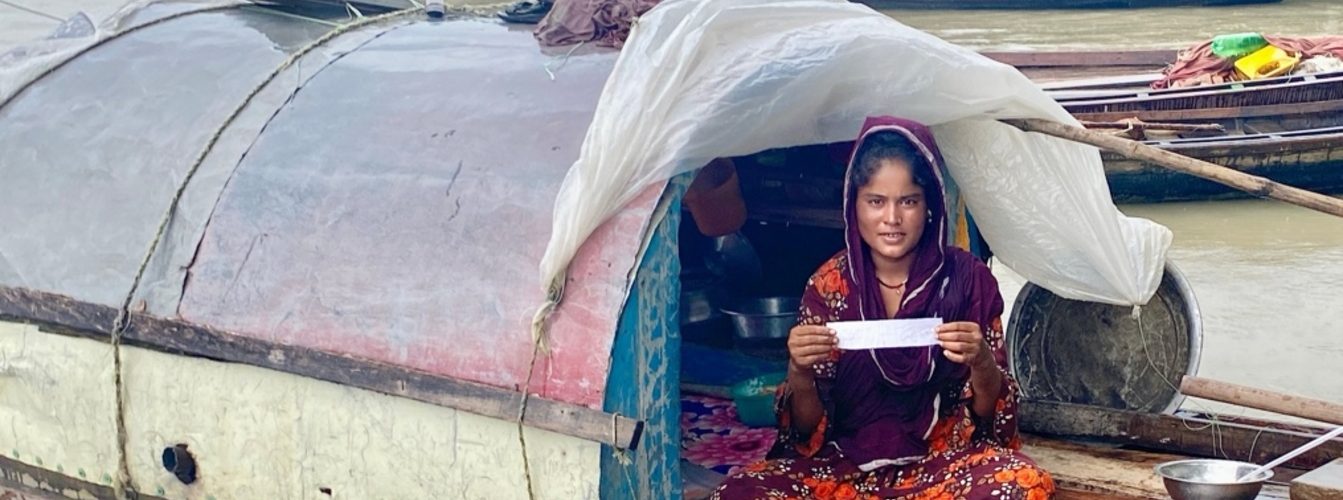
Sharmin Begum, a 25-year-old woman from the Mantha community, resides on a boat near Arialkha River, close to the Laharhat Bazar in the Tungibaria Union of Barishal Sadar Upazila. For generations, she has been living on the boat and fishing in the river for survival like others women from her Mantha community. Although born in Bangladesh, Sharmin had never been recognized as a citizen by the state. She lacked a birth registration, a national ID card, and, as a result, could not vote or access government services. For years, she felt invisible, as though her existence was overlooked by the state.

The beginning of change
In October 2024, the Samajik Unnayan Sangstha (SUS) in collaboration with Chandradip Development Society Alliance (CDS) began a project titled "Enhancing Information & Inclusion of fisher folk Women especially the Mantha Community." Initially, Sharmin was hesitant, but she gradually engaged in workshops, public forums, and advocacy activities. She realized that the NID was not only necessary for voting rights, but it also open access to healthcare, education, and social security.
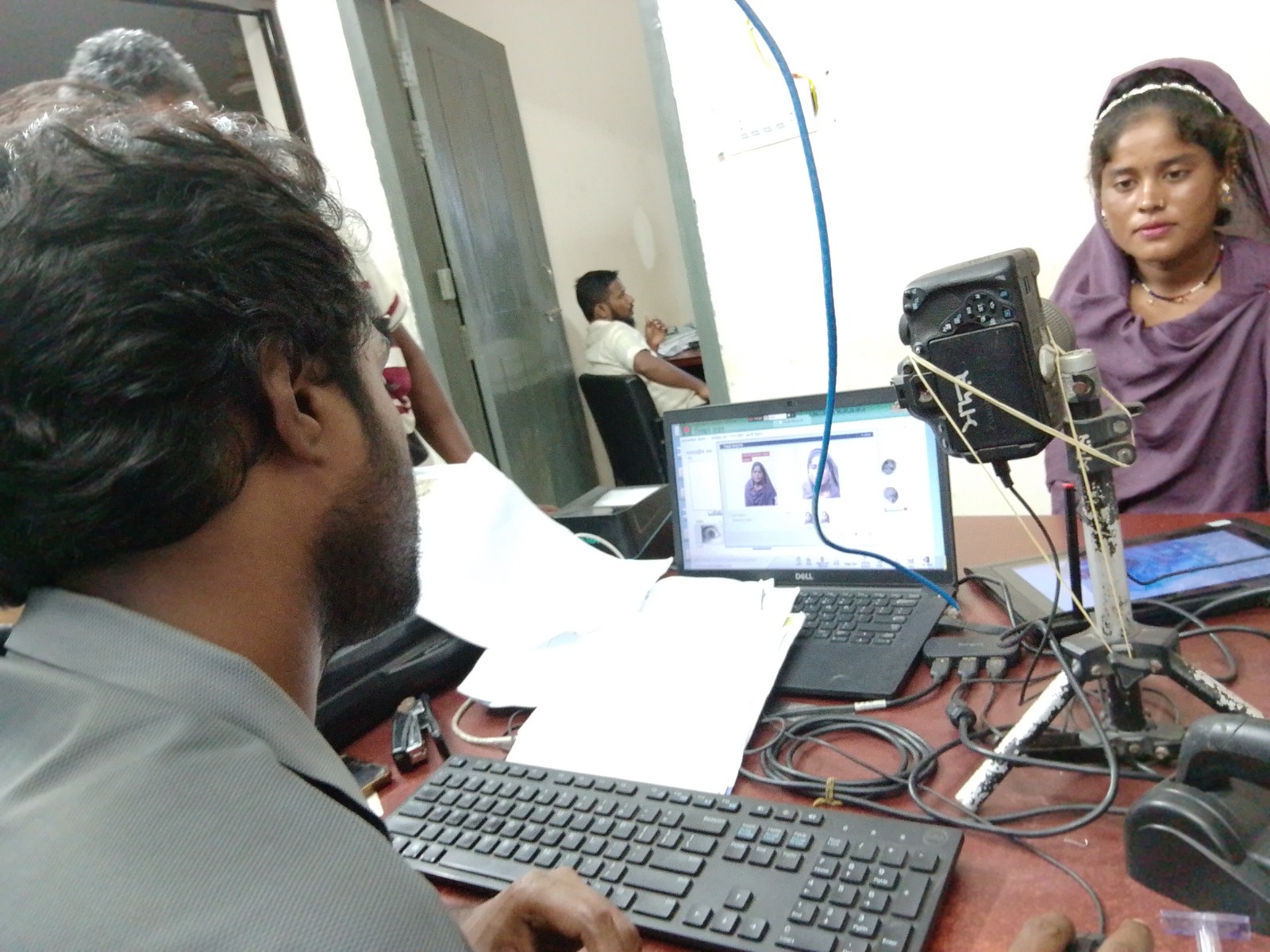
Sharmin Begum’s journey took a transformative turn when she went to the Union Parishad to collect her birth registration. With the guidance and support of SUS, she was able to visit the Barishal Sadar Upazila Election Commission office and successfully register as a new voter.
That day, holding the receipt in her hands, Sharmin couldn’t hold back her emotions and said: “Now my existence is no longer invisible. This NID card has given me my rights and has recognized me as a full citizen of my country.”
Inspired by Sharmin’s action, six (6) more women from her community followed her lead and managed to register as new voters too and Twenty one (21) had migrated their NID cards. This marked a collective step toward recognition and inclusion for the Mantha community.
Sharmin’s success reflects the power of collective effort. With support from SUS and its partners, she and her community have taken their first steps from invisibility to visibility, exclusion to empowerment. Her story is proof that when women are given the right support and resources to claim their rights, entire communities can rise with them.